
Fact sheet:
Affordability of higher education
Key facts:
College costs have been decreasing over the last decade at both public and private institutions.
Most families do not pay “sticker price.” Actual costs have dropped thanks to financial aid.
According to recent College Board data, the inflation-adjusted net price for tuition and fees at private campuses nationwide decreased 12% over the last ten years. At public institutions, it dropped 40% in the last decade.
Over the last five years, tuition sticker prices have increased more slowly than inflation at America’s public colleges and universities.
America’s endowment-driven colleges and universities are among the country’s most affordable.
Princeton facts:
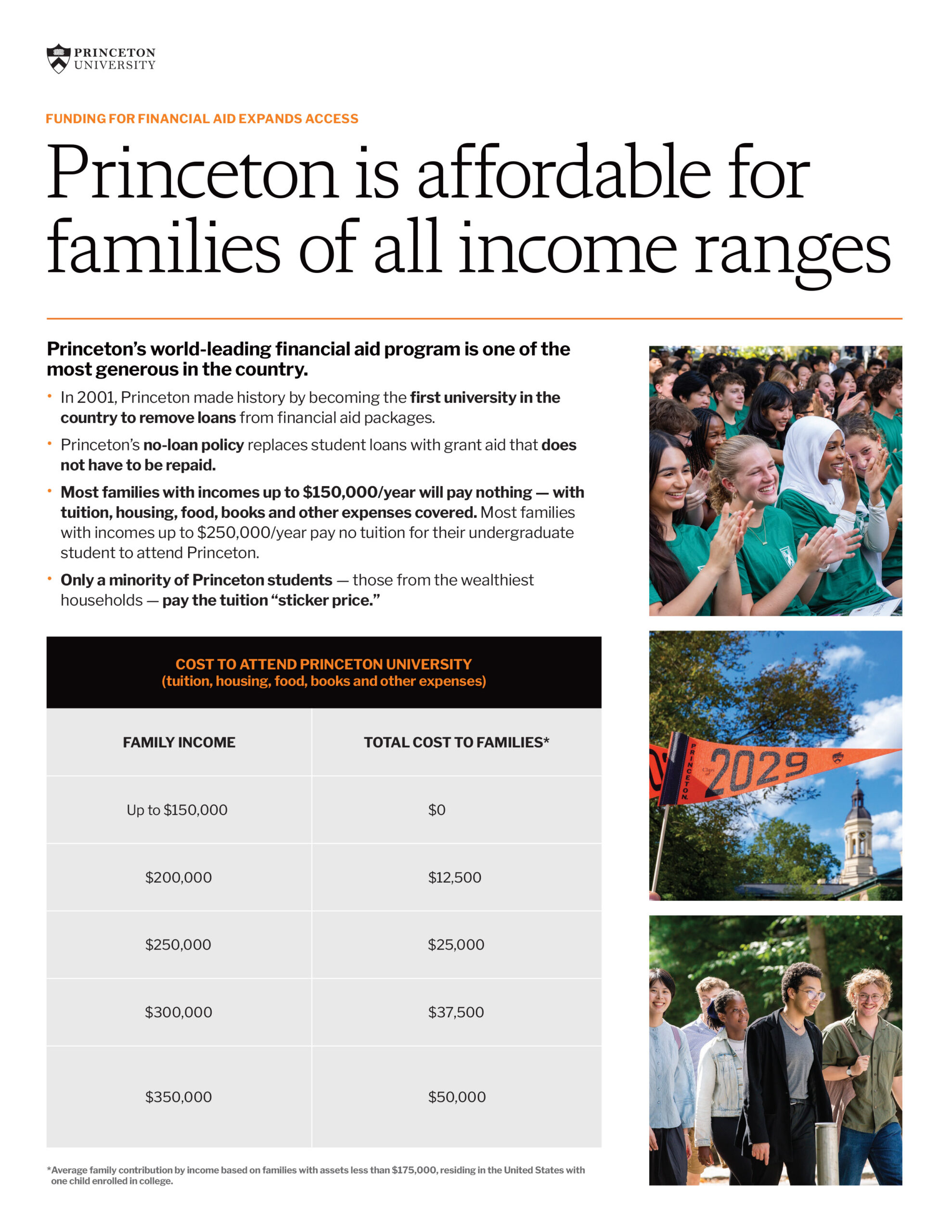
Princeton’s financial aid program is one of the most generous in the country.
Princeton’s no-loan policy replaces student loans with grant aid that does not have to be repaid.
Most families with incomes up to $150,000/year will pay nothing, with housing, food, books and expenses covered in addition to tuition. Most families with incomes up to $250,000/year pay no tuition for their undergraduate student to attend Princeton. Most families with incomes up to and even beyond $350,000/year will receive grant aid.
71% of students at Princeton receive financial aid.
More than 60% of the financial aid budget is supported by dedicated University endowments.
90% of Princeton students graduate debt-free.
Resources:
Share these stories:
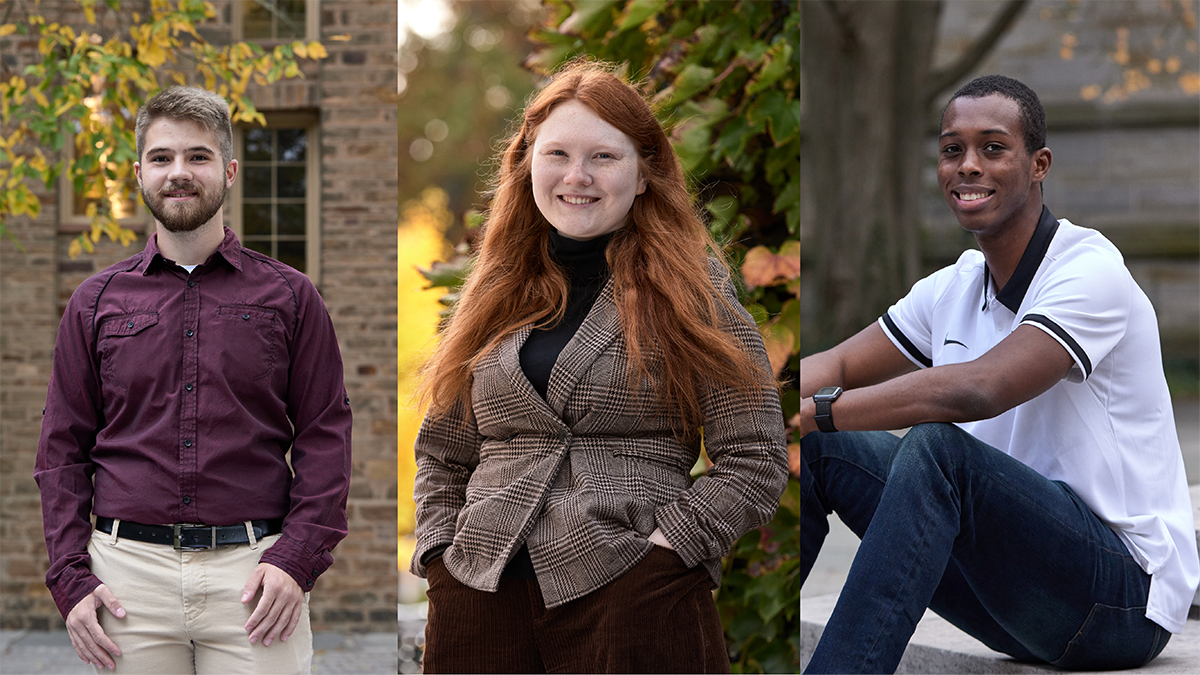
Matthew Trotter ’22: An “unparalleled” financial aid package makes a dream a reality
Matthew Trotter grew up in Union Dale, Pennsylvania, population 239. “Everyone knows each other and helps each other. But at the same time, there’s not always a lot of opportunity for people to live out their dreams.” The imposing costs of college loomed over Trotter’s own dreams until he received a “yes” from Princeton. “I accepted as soon as I saw the financial aid package. The package that I was given was unparalleled — it gave me momentum to follow my dreams.” Four years after Princeton, Trotter graduated from Sidney Kimmel Medical College and will soon begin his family medicine residency near Philadelphia. “Through the doors opened for me by Princeton, I look forward to helping serve the community as a doctor,” he said.
Autumn Shelton ’24: A heart for service in rural America
Autumn Shelton grew up in Lamar, Missouri, a small town in the southwestern part of the state. She hadn’t considered applying to Princeton until visiting for an arts and humanities seminar during her senior year. Her time at the University inspired a passion to serve humanity, particularly in rural areas like Lamar. “I realize how unique and important my hometown and culture are, and I want to go back to rural America and be one of the people who are working to protect it and make it better.” After graduation, Shelton joined the staff at Camp McDowell in Alabama where she farms and teaches children hands-on agricultural skills. She plans to start law school in the fall and return to rural America following graduation.
Taraje Whitfield ’22: A first-generation college student paves the way for his family
A varsity athlete from Millersville, Pennsylvania, Taraje Whitfield overcame the complications of remote learning during the pandemic, not only maintaining his studies online, but also supervising and tutoring his youngest siblings. “I helped them out a lot growing up, and now it brings me so much joy to hear them talk about wanting to go to Princeton when they grow up. I haven’t had anyone in my family that I could go to for counsel about college, but I think it’s a huge blessing that I could be the person who paves the way for a new standard where college is normal for the generations of family behind me.” Since graduating in 2022, Whitfield earned a master’s in biomedical science at the University of Connecticut and is finishing his first year in the Medical Scientist Training Program at Albert Einstein College of Medicine, where he was elected class president. “Princeton played a major role in my getting to where I am now, and I will forever be grateful to the University for its support of me, and the doors it opened.”
Tell your story:
Did you benefit from financial aid or know someone who did?