
Fact sheet:
Academic freedom and free speech on college campuses
Key facts:
Open discussion remains a core value of higher education. College campuses are where people are having robust, challenging conversations.
A recent Lumina Foundation-Gallup study shows that most students believe their school does well in promoting free speech.
The same survey shows that feelings of respect and belonging are consistent across students of all genders, races and major political parties.
Princeton facts:
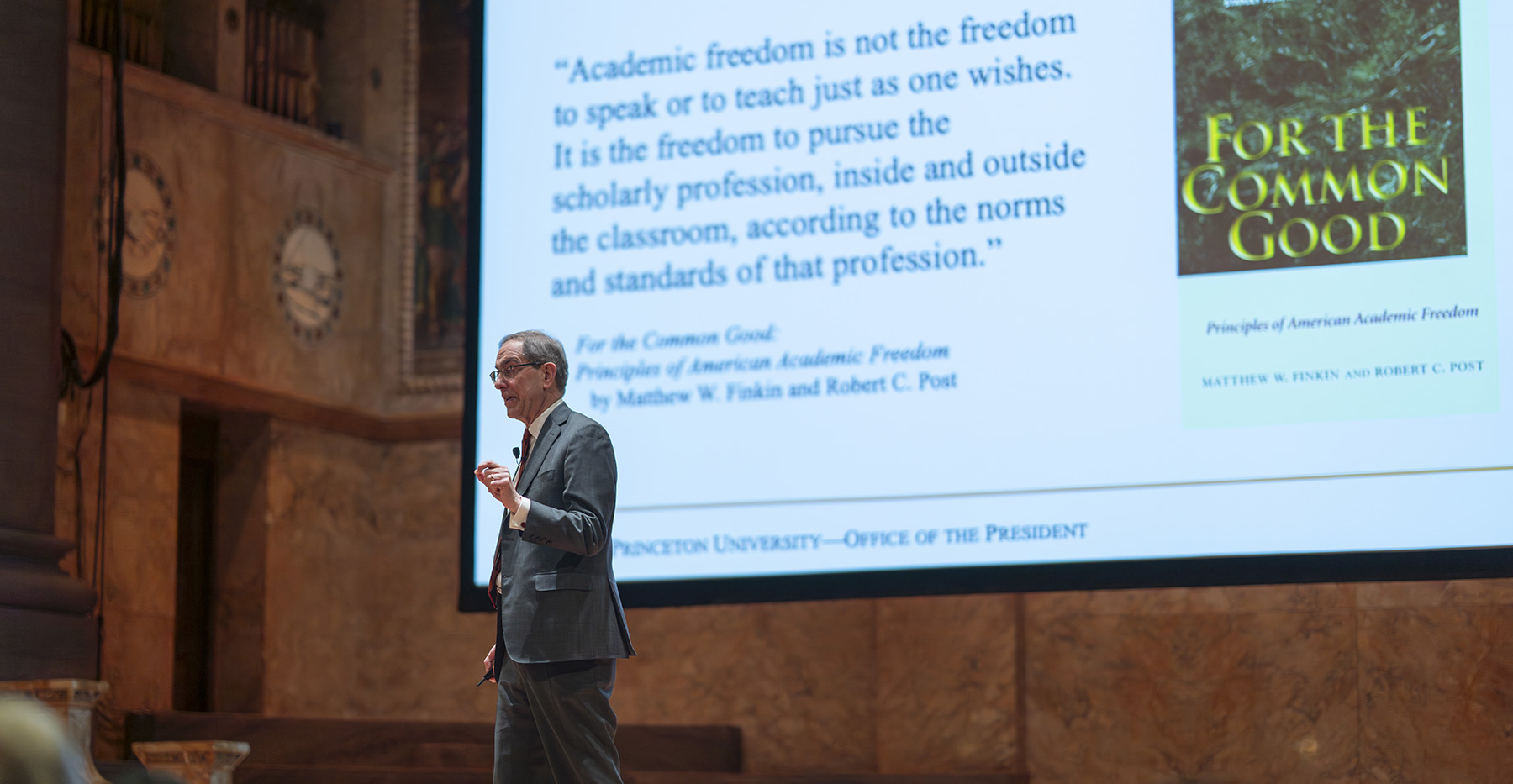
Princeton’s research and teaching mission rests on a bedrock commitment to free expression, where thoughtful people of all backgrounds may voice their opinions civilly in classrooms, auditoriums, faith-based centers, residential colleges and other campus spaces.
Princeton supports strong free speech protections alongside commitments to student safety and inclusivity.
Resources:
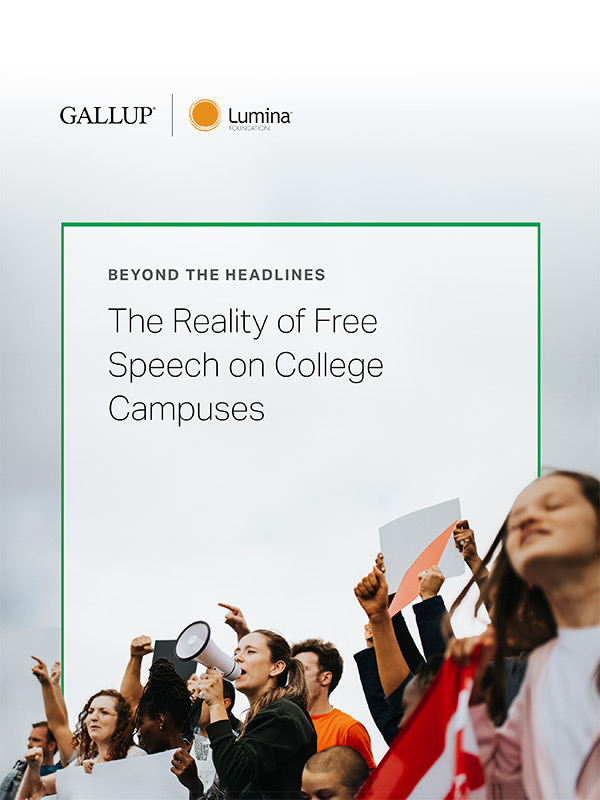
Lumina Foundation study on the reality of free speech on college campuses

Gallup News: Most students say college does well promoting free speech

An overview of academic freedom and free expression at Princeton
Share these stories:
President Eisgruber has been standing up for academic freedom on college campuses, saying that “universities and their leaders have a special responsibility to defend and explain academic freedom, which is crucial to the excellence of research and teaching.” Read more in this excerpt from his 2026 State of the University letter.
Princeton’s research and teaching mission rests on a bedrock commitment to free expression, where thoughtful people of all backgrounds voice their opinions in civil discussion. Read more about how this value plays out every day across campus.
Tell your story:
Do you remember a time when you encountered someone at Princeton with a different viewpoint from your own? How did you respectfully communicate with that person?
Did you ever attend an event at Princeton featuring a speaker with whom you disagreed? What did you learn from that experience?